When We Posted About DNA on LinkedIn, the Data Told Us Something Unexpected
Last week, we shared a simple message on LinkedIn: "Your resume is becoming obsolete. Your DNA is not."
It was a provocation — but also a genuine belief. In the Age of AGI, the skills listed on your profile are being automated faster than you can update them. So we asked: what if the next layer of career intelligence wasn't about what you've done, but about who you genetically are?
The response surprised us. Not the likes or shares — but who was paying attention.
The Numbers That Matter
LinkedIn's built-in analytics showed us exactly who engaged with the post:
- 41.6% Senior-level professionals, plus 12.4% Managers and 8% Directors — over 62% were decision-makers
- 27.4% from companies with 10,000+ employees — enterprise-scale organizations
- Top industries: IT Services (23.9%), Telecommunications (11.5%), Software Development (7.1%), Semiconductor Manufacturing (6.2%)
This wasn't a viral meme. This was a targeted signal from the professional world: the people who hire, manage, and build teams are interested in what DNA can tell us about career fit.

Why Recruiters Should Care About Genetic Career Matching
Today's hiring process is broken. Resumes are optimized by AI. Cover letters are generated by chatbots. Interviews are coached by prompt engineering. The signal-to-noise ratio in recruitment has never been worse.
Meanwhile, companies spend an average of $4,700 per hire (SHRM data), and nearly 46% of new hires fail within 18 months — not because they lack skills, but because of poor personality and culture fit.
What if there were a layer of data that couldn't be faked, couldn't be optimized by AI, and remained stable throughout a person's entire career?
That layer is DNA.
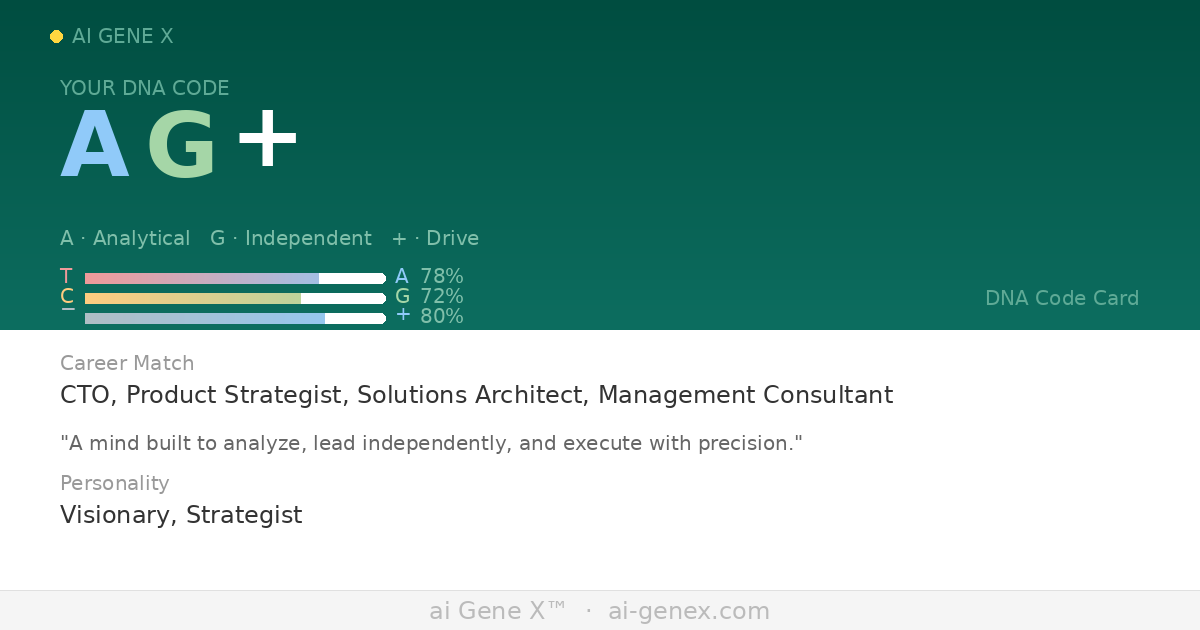
At ai Gene X™, we analyze actual genetic data to generate a DNA Code — a 3-character identifier (like AG+ or TC-) that reveals a person's innate thinking style, relationship approach, and action pattern. This isn't astrology. It's genomics meets career science.
The Missing Layer in Professional Networks
Think about what LinkedIn knows about you: your job history, your education, your skills endorsements, your network connections. All of this is behavioral and self-reported — and all of it can be gamed.
Now imagine a professional platform that also understood your biological baseline:
- Thinking axis: Are you genetically predisposed toward analytical reasoning (A) or intuitive pattern recognition (T)?
- Relation axis: Do you naturally lean toward independent work (G) or collaborative, compassionate teamwork (C)?
- Action axis: Is your default mode driven execution (+) or reflective, calm strategy (-)?
This isn't replacing the resume. It's adding a dimension that the resume was never designed to capture — and that AI can never fabricate.

From Career Matching to Team Chemistry
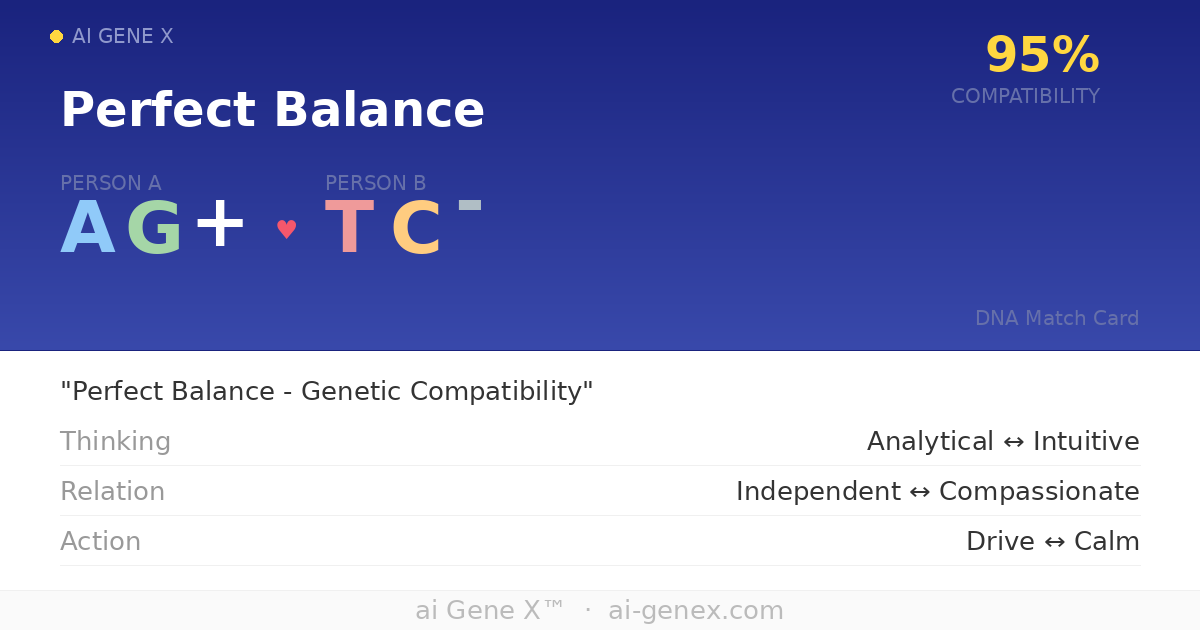
Our DNA Match feature already shows how two DNA Codes interact — from "Soul Twin" (100% match) to "Perfect Balance" (complete opposites that complement each other). Now scale that concept:
- Team composition: A startup building a founding team could balance AG+ (strategic visionaries) with TC+ (empathetic leaders) and TG- (creative independents)
- Manager-report fit: Understanding that an AC- manager (thoughtful, caring, reflective) might need different communication strategies with a TG+ direct report (bold, independent, driven)
- Culture matching: Instead of vague "culture fit" interviews, companies could understand the genetic personality distribution of their existing team — and hire accordingly
The Market Is Ready
The global genetic testing market is projected to reach $35.7 billion by 2030 (Grand View Research). The HR tech market is worth $40 billion. The intersection of these two markets — genetic career intelligence — is virtually untapped.
And the LinkedIn data from our single post tells us something powerful: the demand already exists. Senior professionals at major enterprises are actively engaging with the idea that DNA should play a role in career development.
They're not just curious. They're clicking. They're reading. They're sharing.

What Comes Next
We've built the foundation: 8 DNA Code types with career recommendations, compatibility matching, famous people matching, and social sharing. The technology works. The science is real. The market signal is clear.
The question isn't whether genetic career intelligence will become mainstream. It's who will own the platform where 1 billion professionals discover that their most valuable career asset was inside them all along.
Your resume tells the world what you've done. Your DNA Code tells the world what you were born to do.
Try it yourself: Upload your VCF file at ai-genex.com and discover your DNA Code. It takes 30 seconds. The insight lasts a lifetime.
Don’t have DNA data yet? Get tested with a trusted service:
Upload your VCF file to ai-genex.com and discover your DNA Code in 30 seconds.
Disclaimer: ai Gene X™ provides genetic personality insights for career guidance and self-discovery purposes. It is not a medical diagnostic tool. All genetic data is encrypted and never shared with third parties.